If you're searching for "lockout tagout locks near me," you're not just shopping—you're solving a critical safety gap. Machinery maintenance without proper lockout procedures leads to preventable injuries, regulatory fines, and operational downtime. The right lockout tagout (LOTO) locks aren’t just metal and plastic—they’re the final line of defense when high-energy systems go offline for service.
Finding local suppliers matters. When a production line halts unexpectedly, waiting days for shipped parts increases risk and costs. Immediate access to compliant lockout devices keeps your team safe and your workflow moving.
This guide cuts through the noise. We’ll help you identify the right types of LOTO locks, what to look for in a local supplier, common mistakes made in lock selection, and how to verify compliance before an audit surprises you.
Why "Near Me" Matters for Lockout Tagout Locks
Time is safety. When a technician needs to isolate a hydraulic press or de-energize an HVAC unit, delays in accessing proper lockout equipment compromise protocol. Relying on distant suppliers or overnight shipping introduces gaps—gaps where workers might bypass procedures or use makeshift solutions.
Local access to LOTO locks ensures:
- Immediate response during emergency maintenance
- On-site training support from knowledgeable distributors
- Faster compliance audits with physical inventory checks
- Personalized consultation on lock types and compatibility
For facilities in manufacturing, utilities, or food processing, having a nearby source for safety locks isn’t a convenience—it’s a risk management strategy.
Think of it like fire extinguishers. You wouldn’t rely on next-day delivery to put out a fire. Same logic applies here.
Types of Lockout Tagout Locks You Should Know
Not all LOTO locks are the same. Choosing the right type depends on equipment, environment, and number of authorized personnel. Here’s a breakdown of the most common types available from local industrial suppliers:
Hasp Locks Used when multiple workers need to apply their individual locks to a single energy isolation point. Steel hasps allow 6–10 padlocks and are ideal for circuit breaker panels or main disconnects.
Common use case: A maintenance team servicing a conveyor system—each technician applies their lock before work begins.
Valve Lockouts Designed to block handwheels on gas, steam, or fluid lines. Available in slide, wrap, and scissor styles depending on valve size and shape.
Mistake to avoid: Using a universal valve lock that doesn’t fully immobilize a large gate valve—always test fit.
Circuit Breaker Lockouts Plastic or polycarbonate devices that snap over breakers, preventing accidental re-energizing. Color-coded options help identify departments or energy types.
Plug Lockouts Secure electrical cords at the outlet. Used in workshops or labs where portable tools are frequently unplugged.
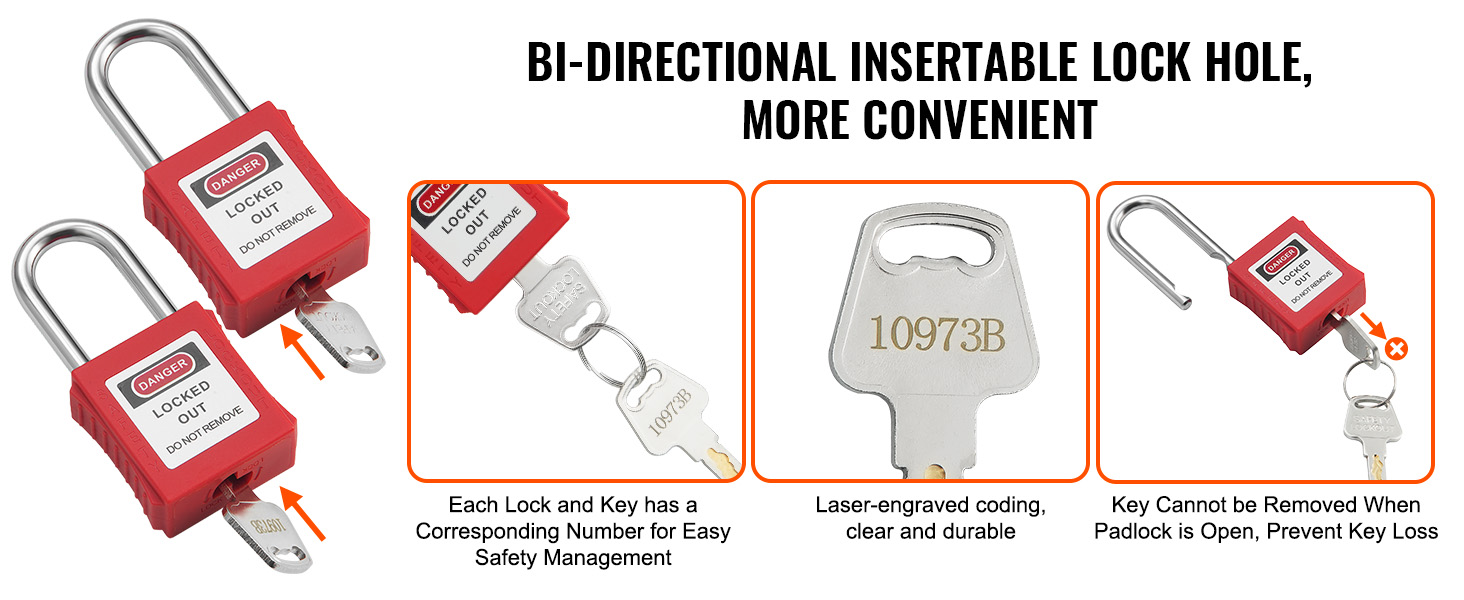
Group Lockout Stations Wall-mounted kits containing multiple locks, tags, hasps, and circuit breaker devices. Often customized per department.
When sourcing lockout tagout locks near you, confirm the supplier stocks these types—and can demonstrate compatibility with your equipment.
How to Find Trusted Local Suppliers
"Near me" searches return auto shops, hardware stores, and industrial suppliers. Not all carry OSHA-compliant LOTO devices. Here’s how to filter effectively:
- Verify OSHA and ANSI compliance – Look for locks labeled per OSHA 1910.147 and ANSI Z244.1 standards. Reputable suppliers know these by heart.
- Check for customization options – Can they engrave employee names on locks? Do they offer color-coded systems?
- Ask about on-site support – Can a rep visit your facility to assess lockout points?
- Review product quality – Brass keyways resist corrosion; shrouded padlocks prevent bolt cutter access.
Use Google Maps with keywords like “industrial safety supplier” or “OSHA lockout equipment” + your city. Cross-reference with distributor networks from major brands like Brady, Master Lock, or Grainger—they often list local partners.
Top 5 Suppliers of Lockout Tagout Locks (U.S. Wide Coverage)
Here are five trusted suppliers with strong local presences and inventory for lockout tagout locks near you:
| Supplier | Key Features | Local Reach | Best For |
|---|---|---|---|
| Grainger | Huge in-stock inventory, online ordering with same-day pickup | 100+ physical locations | Fast access, bulk orders |
| Brady Corporation | Customizable locks, tags, and full LOTO programs | Regional service centers | Compliance-focused teams |
| Master Lock (via authorized dealers) | Durable, corrosion-resistant locks | Distributors in every state | High-abuse environments |
| Safety Made | Specializes in LOTO solutions, U.S.-made products | Direct sales + resellers | Precision valve and breaker locks |
| Lockout Safety Systems | On-site training, mobile van support | East and Midwest U.S. | Facility-wide rollouts |
Pro tip: Call ahead. Not all locations carry full LOTO lines. Ask for the safety equipment specialist—they’ll know which locks work for your machinery.
Common Mistakes When Buying LOTO Locks Locally
Even with nearby suppliers, teams make these critical errors:
1. Choosing Aesthetics Over Function Bright colors are helpful—but if the lock body is too large to fit in a breaker enclosure, it’s useless. Always test-fit.
2. Ignoring Key Control Systems Duplicate keys defeat the purpose. Use keyed-alike or keyed-different systems carefully. Master key sets should be restricted to supervisors.
3. Skipping Tag Compatibility Locks must work with standardized danger tags. Check that the shackle fits through the tag’s hole and the tag meets OSHA’s 1910.147(c)(6) requirements.
4. Overlooking Environmental Factors Outdoor or washdown areas need stainless steel or UV-resistant plastic. A rusted lock is a failed lock.
5. Assuming One-Size-Fits-All A lock that works on a 480V disconnect may not fit a pneumatic valve. Audit your isolation points first.
A local supplier worth their salt will help you avoid these—ask for a site evaluation before purchasing.
Building a Localized LOTO Program

Finding locks nearby is step one. Integrating them into a functional program is the goal.
Start with an energy control audit. Walk through your facility and tag every isolation point: electrical panels, valves, hydraulic lines, conveyor stops. Document each one.
Then, match lock types to isolation methods. Use smaller padlocks for compact breakers, group hasps for shared systems.
Next, train authorized employees—not just maintenance staff. Include temporary workers, contractors, and supervisors.
Finally, establish a lock checkout system. Some facilities use lockout boards with numbered slots. Each worker checks out their personal lock and tag at the start of a shift.
Local suppliers often provide this setup as a service. Grainger and Brady offer LOTO program kits that include audit templates, training materials, and signage.
Real-World Example: Automotive Parts Manufacturer
A plant in Detroit needed to replace a robotic arm on an assembly line. With three technicians involved, they used a group lockout hasp on the main power disconnect. Each applied their individual padlock—blue for mechanical, red for electrical, green for robotics.
When a fourth technician arrived late, he couldn’t start work until his lock was added. The system prevented premature energizing—even though pressure was high to resume production.
Their lockout tagout locks were purchased from a Grainger branch 15 minutes away. When one lock was lost, they had a replacement by noon.
This isn’t theoretical. It’s how compliance protects people.
What OSHA Expects During an Inspection
OSHA doesn’t care where you bought your locks—only that they meet standards and are used correctly.
During an audit, expect to show:
- Written energy control procedures
- Training records for authorized employees
- Inventory of lockout devices
- Proof of annual program inspections
Inspectors will also test usage. They might ask a technician to demonstrate locking out a machine. If the lock doesn’t fully prevent startup—or if tags are missing information—it’s a citation.
Having locally sourced, well-documented equipment makes defense easier. You can point to purchase records, training logs, and supplier support agreements.
Act Now: Secure Your Supply Chain for Safety
Searching for "lockout tagout locks near me" should lead to action—not just information. Every hour your team works without proper LOTO devices is a risk compounded.
Visit a local industrial supplier this week. Bring photos of your isolation points. Request samples. Test fit locks on your breakers and valves.
Build your core LOTO kit with at least: - 10 high-quality padlocks (varied colors) - 2 universal valve lockouts - 1 circuit breaker lockout set - 1 group lockout hasp - OSHA-compliant tags and attachment cables
Pair that with training and audits, and you’re not just compliant—you’re creating a culture where safety is immediate, visible, and non-negotiable.
Your team relies on it. So does your bottom line.
Frequently Asked Questions
Where can I buy lockout tagout locks locally? Check industrial suppliers like Grainger, Brady, or Master Lock distributors. Use Google Maps with “safety equipment supplier” + your city.
What makes a LOTO lock OSHA-compliant? It must be durable, weather-resistant, standardized, and identifiable to a single employee. Tags must include warnings and employee information.
Can I use regular padlocks for lockout? No. Regular locks lack the required durability and standardization. Use only locks designed for LOTO procedures.
How many locks do I need for group maintenance? One per authorized worker. Use a group lockout hasp to combine individual locks at a single isolation point.
Do lockout locks need to be color-coded? Not required, but highly recommended. Colors help identify departments, energy types, or lock ownership.
Can contractors use my facility’s lockout locks? Only if they’re trained and authorized. Contractors should ideally use their own locks, but shared systems are allowed with clear procedures.
What’s the difference between lockout and tagout? Lockout physically prevents energy release (e.g., padlock on a switch). Tagout uses warning tags alone—less secure and only allowed in specific cases under OSHA.
FAQ
What should you look for in Lockout Tagout Locks Near Me – Find Reliable Suppliers Fast? Focus on relevance, practical value, and how well the solution matches real user intent.
Is Lockout Tagout Locks Near Me – Find Reliable Suppliers Fast suitable for beginners? That depends on the workflow, but a clear step-by-step approach usually makes it easier to start.
How do you compare options around Lockout Tagout Locks Near Me – Find Reliable Suppliers Fast? Compare features, trust signals, limitations, pricing, and ease of implementation.
What mistakes should you avoid? Avoid generic choices, weak validation, and decisions based only on marketing claims.
What is the next best step? Shortlist the most relevant options, validate them quickly, and refine from real-world results.